


Mental Wellness Workshop for Kids in Singapore
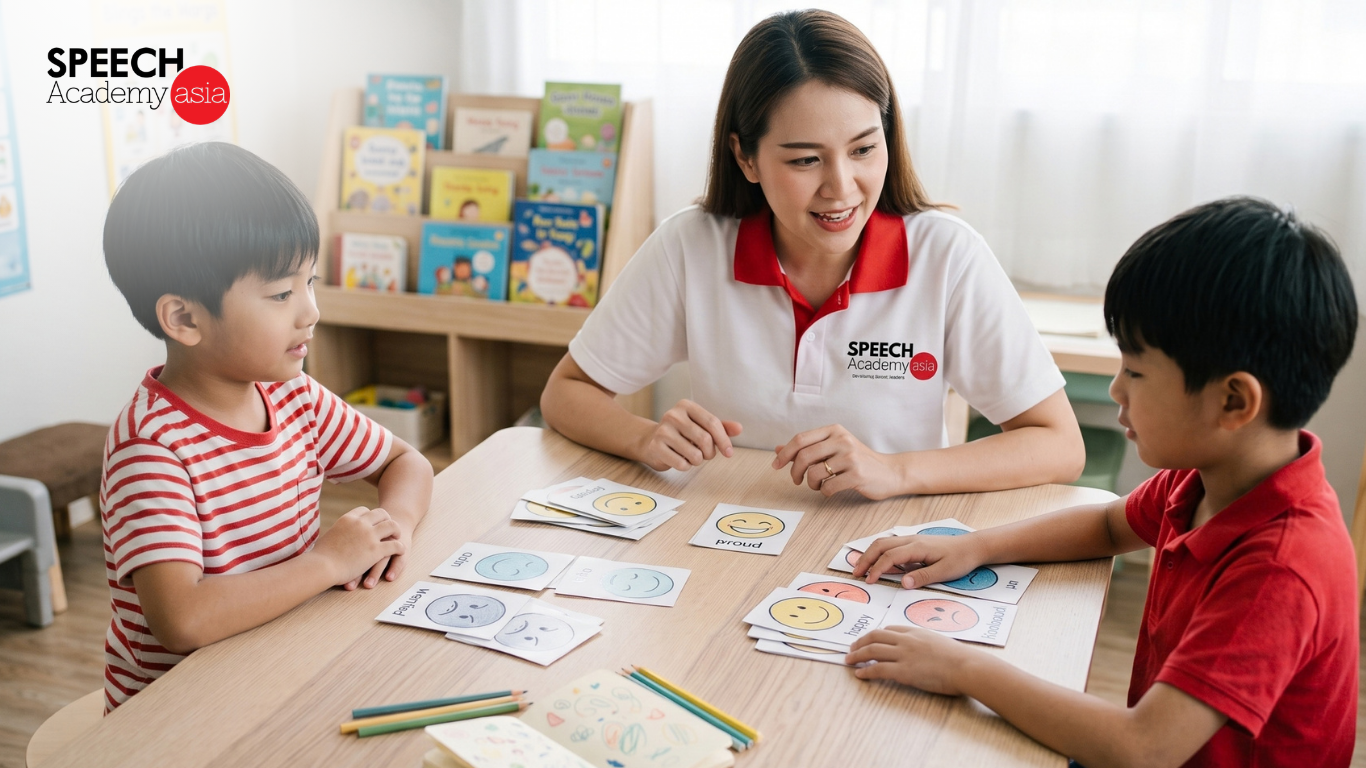
Mental wellness is not about being happy all the time. It is about understanding feelings, coping with pressure, asking for help and staying connected to the people around you.
Whether you are looking for a mental wellness workshop for kids, teens or schools, the right programme can help young people build the emotional skills they need to handle everyday challenges.
In Singapore, children juggle school expectations, exams, friendships, CCAs and screen time, often all at once. Emotional skills can support them through presentations, peer conflict, exam periods and the move from primary to secondary school.
At Speech Academy Asia, our Mental Wellness Workshop for Kids & Teens builds resilience, communication and peer support skills through interactive, practical learning.
What Is a Mental Wellness Workshop?
A mental wellness workshop is an interactive, skills-based session that teaches children and teens how to understand their emotions, manage stress and support one another.
It is a form of prevention and skill-building. It is not therapy or clinical treatment, and it does not replace professional care for a child who needs it.
Depending on the age group, a mental wellness workshop may cover:
-
Naming and understanding emotions
-
Managing stress and nervousness
-
Building resilience after setbacks
-
Active listening and empathy
-
Communicating feelings clearly
-
Healthy boundaries with devices and social media
-
Handling conflict with friends
-
Knowing when and how to ask for help
-
Supporting a friend who is struggling
-
Character values such as responsibility and respect
The best workshops combine learning with practice. Children should not only hear about coping skills, but also try them in role-plays, group discussions and hands-on activities.
Who Can Benefit from a Mental Wellness Workshop?
Emotional skills are useful for every child, not only those who are struggling. That is what makes prevention-focused workshops different from treatment.
Mental Wellness Workshops for Kids (Primary School)
Younger children often feel big emotions without the words to explain them.
A workshop can help children practise:
-
Putting feelings into words
-
Calming down after frustration or disappointment
-
Making and keeping friends
-
Handling mistakes and losing gracefully
-
Telling a trusted adult when something is wrong
-
Listening to others without interrupting
At Speech Academy Asia, our programmes for kids combine communication training with social and emotional learning, so children learn to express what they feel.
Looking for something that builds speaking confidence as well? Explore our Public Speaking for Kids programme.
Mental Wellness Workshops for Teens
Teenagers face a different mix of pressures, from academic expectations to social media and identity.
A workshop can help teens develop the ability to:
-
Recognise early signs of stress in themselves and others
-
Communicate openly with parents and friends
-
Respond to peers who are having a hard time
-
Set healthy limits on screen time
-
Build empathy and leadership through peer support
-
Speak up when something does not feel right
These skills can complement academic learning and help teens support each other well beyond the classroom.
Mental Wellness Programmes for Schools and Parents
Schools increasingly look for programmes that build a supportive culture, not just academic results. Parents also benefit from understanding what healthy emotional development looks like.
Speech Academy Asia offers the mental wellness workshop both for individual learners and as a school programme, grounded in Social and Emotional Learning (SEL) and Character and Citizenship Education (CCE).
What Should You Look for in a Mental Wellness Workshop?
Not every wellness workshop is designed in the same way. Before choosing one, consider these five factors.
1. Practical, Interactive Activities
Emotional skills grow through practice, not lectures.
Look for role-plays, group discussions and hands-on activities where children take part rather than sit and listen.
2. Age-Appropriate Content
A seven-year-old and a fifteen-year-old need very different conversations.
Younger children may work on naming feelings and calming down, while teens may focus on stress, peer support and communication with adults.
3. Clear Boundaries About What the Workshop Is
A trustworthy provider is honest about what a workshop can and cannot do.
A skills-based workshop builds resilience and awareness. It does not diagnose or treat. A good provider will say so, and will point families to professional support when it is needed.
4. A Structured Framework
Look for a learning framework rather than a collection of unrelated activities.
At Speech Academy Asia, our mental wellness programme is grounded in SEL and CCE principles, and draws on our communication methodologies, including Speech Linguistic Patterns™, Neuro Somatics™ and Language Memory Programming Semantics™.
5. Real-World Application
The goal is not to do well in the workshop. It is to use the skills at home, in school and with friends.
Ask how the programme helps children carry skills into daily life, for example through peer support roles or leadership activities.
7 Ways to Support Your Child’s Mental Wellness at Home
You do not need to wait for a workshop to start. Try these simple habits.
1. Make Check-Ins a Routine
Ask specific questions instead of “How was school?”
Try: “What was the best part of your day? What was the hardest part?”
Asking the same questions at the same time each day makes it easier for children to open up.
2. Help Them Name the Feeling
Children often say they feel “bad” or “fine” when they mean something more specific.
Offer words such as worried, left out, embarrassed, disappointed or proud. A bigger emotional vocabulary makes feelings easier to talk about.
3. Normalise Nerves and Mistakes
Let your child know that feeling nervous before a test or presentation is common.
Share a time you felt the same way and what helped.
4. Protect Sleep and Downtime
Rest is part of mental wellness, not a reward for finishing everything else.
Keep some unscheduled time in the week, especially during exam periods.
5. Model Healthy Device Habits
Children copy what they see.
Keep shared device-free times, such as meals, and follow the same rules yourself.
6. Practise a Calming Routine Together
Slow breathing, a short walk or a favourite quiet activity can become a familiar way to settle down.
Practise when your child is calm, so it is easier to use when they are not.
7. Show Them Who They Can Talk To
Help your child identify two or three trusted people, at home, at school or among friends.
Knowing who to go to, and that asking for help is fine, is one of the most protective skills a child can have.
What Makes Speech Academy Asia Different from Other Programmes?
When parents and schools compare mental wellness programmes, one question matters:
What does this programme actually teach, and how?
Skills Through Communication
Our programme builds emotional skills through communication. Children learn to put feelings into words, listen actively and speak up, which is where our public speaking expertise comes in.
Peer Support Leadership
Our Mental Wellness Workshop for Kids & Teens includes a peer support focus, teaching young people how to listen, respond with empathy and know when to involve a trusted adult.
Experience with Young Learners
Since 2012, Speech Academy Asia has trained more than 10,000 students and expanded beyond Singapore into markets including Indonesia and Brunei.
Experience with Schools
Speech Academy Asia has worked with more than 100 MOE schools in Singapore, and has delivered mental wellness workshops to primary school students in schools.
A First for Singapore
Speech Academy Asia organised Singapore’s first Mental Wellness Peer Support Symposium, where students practised empathy, active listening and peer support with guidance from mental health professionals and experienced trainers.
Programmes for Different Stages
From young children learning to name their feelings to teens leading peer support, our programmes grow with your child.
Mental Wellness Workshop vs Counselling: What’s the Difference?
These are sometimes confused, but they serve different purposes.
A mental wellness workshop builds skills and awareness in a group setting. Counselling or therapy is individual clinical support for a child who is struggling.
| Mental Wellness Workshop | Counselling or Therapy |
|---|---|
| Builds skills and awareness | Assesses and supports specific difficulties |
| Led by trained trainers and facilitators | Delivered by licensed professionals |
| Suitable for all children | Suitable for children with ongoing concerns |
| Group, activity-based learning | Individual or family sessions |
| Prevention and resilience-building | Treatment and clinical care |
The right option depends on your child’s needs. Many children benefit from a skills-based workshop. Children who show ongoing distress need professional assessment, and a workshop should sit alongside that support, not replace it.
When to Seek Professional Support
Every child has hard days. It may be time to speak to a doctor, school counsellor or mental health professional if you notice changes that last for weeks, such as:
-
Ongoing sadness, irritability or worry
-
Withdrawing from friends or activities they used to enjoy
-
Changes in sleep or appetite
-
Frequent stomach aches or headaches with no clear cause
-
Refusing to go to school
-
Any talk of self-harm or not wanting to be alive
If your child is in immediate danger, call 995. For support in Singapore, you can contact:
-
IMH Mental Health Helpline: 6389 2222 (24 hours)
-
Tinkle Friend (for primary school children aged 13 and below): 1800 2744 788
-
Care Corner 800 Counselling Hotline (Mandarin): 1800 3535 800
Operating hours can change, so check the National Council of Social Service list of youth resources for current details.
Why Mental Health for Kids Is Worth Building Early
Emotional habits form early.
According to the World Health Organization, about one in seven 10 to 19-year-olds globally experiences a mental health condition, and many go unrecognised and untreated. The WHO also notes that adolescence is a crucial period for developing the social and emotional habits that support mental well-being.
A WHO and UNICEF report covered by UN News found that around one-third of mental health conditions emerge before age 14. That is why noticing early, talking openly and building skills matter.
Skills-based workshops are not a cure. They are one part of a supportive environment that also includes family, school and, when needed, professional care.
Frequently Asked Questions About Mental Wellness Workshops for Kids
What is taught in a mental wellness workshop for kids?
A mental wellness workshop may cover naming emotions, managing stress, building resilience, active listening, healthy device habits, handling conflict and knowing how to ask for help. The exact content depends on the age group and objectives.
Is a mental wellness workshop the same as therapy?
No. A workshop is a group, skills-based learning experience focused on prevention and resilience. Therapy or counselling is individual clinical support delivered by licensed professionals. A workshop does not replace either.
Is a mental wellness workshop suitable for shy children?
Yes. A supportive workshop can help shy children practise expressing feelings and speaking up at their own pace. The aim is not to change a child’s personality, but to help them communicate more comfortably.
At what age should children start?
Children can start building emotional skills from a young age. Activities are adapted to each age group, with younger children starting with naming feelings and older students moving to stress, peer support and communication.
Can a workshop help with exam stress?
It can help children recognise stress and practise coping habits such as calming routines and asking for help. It is not a substitute for professional support if a child is showing ongoing distress.
What should I look for when choosing a mental wellness workshop in Singapore?
Consider whether the activities are interactive, the content suits your child’s age, the provider is clear about what a workshop can and cannot do, there is a structured framework, and the skills can be used in daily life.
Build Resilience. Find Your Voice. Support Each Other.
Strong emotional skills are not about hiding difficult feelings. They are about understanding them, expressing them and knowing when to reach out.
That is why choosing the right mental wellness workshop matters.
At Speech Academy Asia, we believe communication is the foundation of emotional wellbeing. From young children learning to name their feelings to teens leading peer support, our programmes help young people become more confident, resilient communicators.
Want to explore mental wellness programmes in Singapore?
Visit our Mental Wellness Workshop for Kids & Teens page to learn more, or enquire about our school programmes.
Give your child the skills to understand their feelings, speak up and support others.
👉 Book a Free Trial Class
📲 Call or WhatsApp: 9061 1715
📍 Visit Us: JEM, 52 Jurong Gateway Road, #06-01, Singapore 608550
📧 Email: info@speechacademyasia.com
Free Trial Registration
Empowering 10,000 Kids and Counting: Boost Your Child’s Confidence and Communication Skills with our Free Trial! Our Public Speaking programme builds vital public speaking and interview skills as well as your child's confidence. Equip your child with the ability to overcome stage fright, present themselves confidently and leave a lasting impression. Investing in these skills early can have immense long-term benefits! Register today!