


Public Speaking Class in Singapore: Help Your Child Speak With Confidence
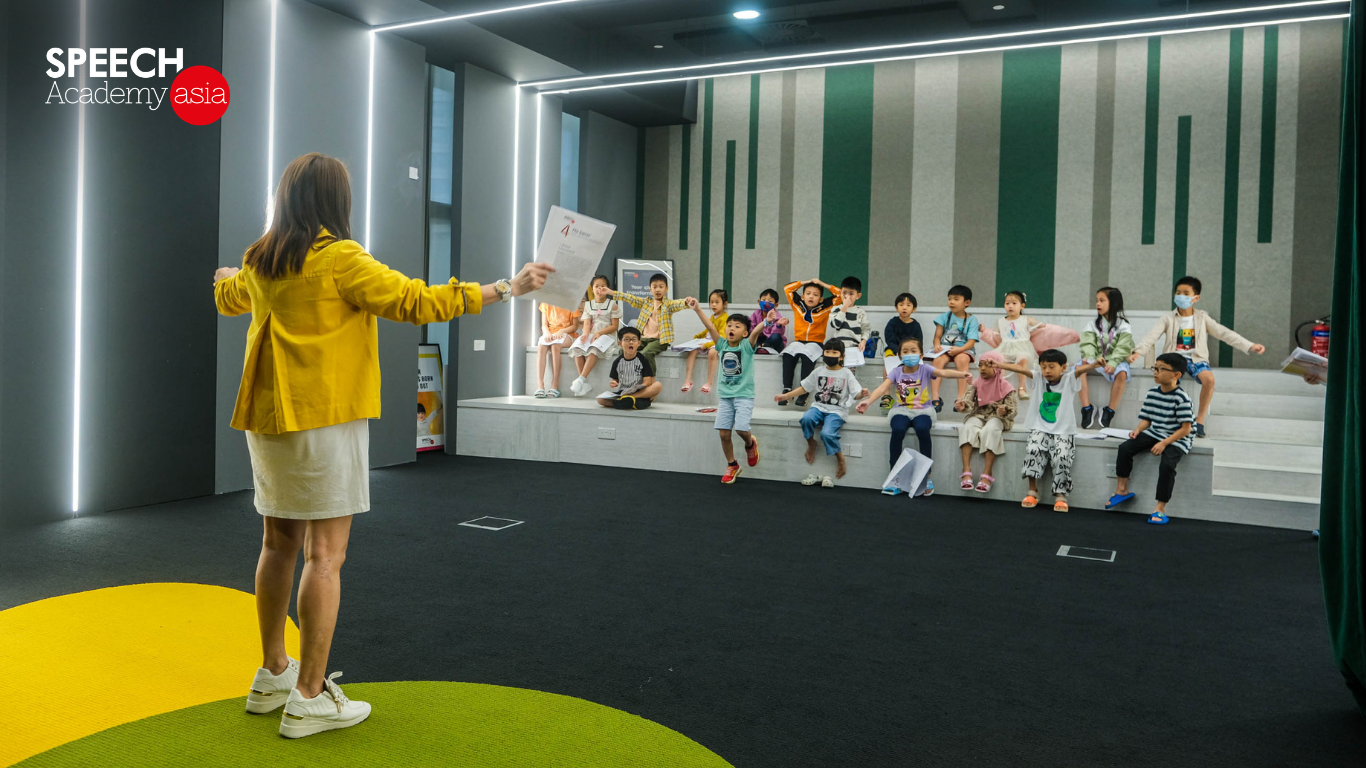
Public speaking is a skill children can use throughout their lives. From answering questions in class and presenting school projects to participating in debates, interviews and group discussions, being able to communicate clearly and confidently can make a meaningful difference.
For children who are shy, nervous about speaking in front of others, or simply want to become better communicators, a public speaking class can provide structured opportunities to practise and improve.
But what exactly happens in a public speaking class, and how can parents choose the right programme for their child?
In this guide, we explore what children can learn from public speaking classes, the benefits of starting young, what to look for in a programme, and how public speaking skills can support children in school and beyond.
What Is a Public Speaking Class?
A public speaking class is a structured programme that helps students develop the skills needed to communicate ideas clearly and confidently in front of an audience.
Depending on the age and level of the student, lessons may include activities such as:
-
Speech writing and organisation
-
Presentation practice
-
Voice projection and vocal expression
-
Body language
-
Storytelling
-
Impromptu speaking
-
Group discussions
-
Debate
-
Persuasive speaking
-
Audience engagement
-
Question-and-answer practice
A good public speaking programme goes beyond asking children to memorise and deliver speeches. Students should have regular opportunities to think, organise their ideas, speak, listen and respond.
This helps public speaking become a practical communication skill rather than simply a performance for the classroom.
Why Should Children Learn Public Speaking?
Children communicate every day. They ask questions, explain their ideas, interact with teachers and classmates, participate in group projects and share their opinions.
However, being able to communicate does not always mean being confident speaking in front of a group.
Some children may have plenty of ideas but struggle to express them clearly. Others may know what they want to say but become nervous when attention is placed on them.
A public speaking class provides a supportive environment where children can practise these skills progressively.
1. Build Confidence
One of the biggest benefits of public speaking classes is the opportunity to build confidence through practice.
Children become familiar with standing in front of others, organising their thoughts and expressing themselves. With repeated practice and encouragement, speaking in front of an audience can become more comfortable.
The goal is not to turn every child into the loudest person in the room. Instead, it is to help each child feel more comfortable expressing their own ideas and voice.
2. Improve Communication Skills
Public speaking involves much more than speaking loudly.
Students learn how to:
-
Organise their thoughts
-
Choose appropriate words
-
Explain ideas clearly
-
Adjust their tone and pace
-
Listen to others
-
Respond to questions
-
Communicate with different audiences
These are important communication skills that children can use both inside and outside the classroom.
3. Develop Presentation Skills
School presentations are an important part of a student’s learning journey.
Children may eventually be expected to present individual projects, participate in group presentations or explain their ideas to their classmates.
A public speaking programme gives students opportunities to practise presentation techniques before they encounter higher-pressure situations.
They can learn how to structure an introduction, develop key points and conclude a presentation clearly.
4. Encourage Critical Thinking
Effective speakers need to think about what they are saying and why they are saying it.
Activities such as discussions, debates and impromptu speaking can encourage children to consider different viewpoints, develop arguments and respond to questions.
This makes public speaking closely connected to critical thinking.
5. Strengthen Leadership Skills
Leadership is not only about taking charge.
A good leader also needs to communicate ideas, listen to others, explain decisions and encourage people to work together.
Public speaking activities can give children opportunities to practise these skills in a structured setting.
6. Help Children Express Their Ideas
Some children are naturally talkative, while others need more time to formulate their thoughts.
A supportive public speaking environment gives students the opportunity to practise expressing themselves without expecting perfection from the beginning.
Over time, students can become more comfortable sharing their opinions, asking questions and contributing to conversations.
What Do Children Learn in a Public Speaking Class?
The content of a public speaking class should generally develop progressively according to the student’s age and ability.
Speech Structure
Students can learn how to organise a speech into a clear beginning, middle and conclusion.
They may practise creating introductions that capture attention, developing supporting points and ending with a clear takeaway.
Voice and Delivery
A strong speech is not only about the words being used.
Students can learn about:
- Voice projection
- Pace
- Pauses
- Tone
- Vocal expression
- Articulation
These techniques help make a presentation easier for an audience to follow.
Body Language
Non-verbal communication plays an important role in public speaking.
Students may practise:
- Eye contact
- Posture
- Facial expressions
- Gestures
- Movement
Learning to use body language naturally can help children become more effective presenters.
Impromptu Speaking
Not every speaking situation gives you time to prepare a complete speech.
Impromptu speaking activities encourage students to organise their thoughts quickly and communicate an answer within a limited amount of time.
This can be particularly useful for classroom discussions, interviews and everyday conversations.
Persuasive Speaking
Persuasive speaking teaches students how to present an opinion and support it with reasons and examples.
Through age-appropriate topics, students can learn how to construct an argument, consider opposing views and communicate their position respectfully.
Debate and Discussion
Debates can encourage children to listen carefully, evaluate different perspectives and respond to ideas.
For older students, structured debate can be a useful way to combine public speaking with critical thinking and reasoning.
What Age Should a Child Start Public Speaking Classes?
There is no single “perfect” age to start learning public speaking.
Younger children can begin with simple activities such as storytelling, show-and-tell, introductions and sharing their opinions.
As children grow older, lessons can gradually introduce more structured speeches, presentations, discussions, debates and impromptu speaking.
The most important consideration is whether the programme is age-appropriate.
A good public speaking class for a young child should not feel like an adult presentation course. Activities should be engaging and suited to the child’s developmental stage.
Similarly, older students should be given more challenging opportunities to develop their reasoning, delivery and presentation skills.
Parents looking for public speaking classes for kids should therefore consider whether the programme offers different levels or learning pathways based on age and ability.
How to Choose the Right Public Speaking Class for Your Child
With different public speaking programmes available in Singapore, parents may wonder how to decide which one is suitable.
Here are several factors to consider.
1. Look at the Class Structure
Find out whether students spend most of the lesson listening to a trainer or actively participating.
Public speaking is a practical skill, so students should have regular opportunities to speak and receive guidance.
2. Consider Class Size
Class size can affect the amount of individual speaking time a student receives.
Smaller groups may allow trainers to provide more individual feedback, while larger groups can provide opportunities for students to practise speaking to different audiences.
Consider which environment would suit your child best.
3. Check the Programme Curriculum
Look beyond a course description that simply says “build confidence”.
Find out what students actually learn.
A comprehensive programme may cover speech structure, delivery, body language, presentation skills, impromptu speaking, discussion and other communication techniques.
4. Consider the Trainer’s Approach
Children learn differently.
A good trainer should be able to encourage students while providing constructive feedback. Students should feel challenged to improve without feeling afraid of making mistakes.
5. Look for Progressive Learning
Public speaking is not usually something a child masters after one workshop.
Regular practice allows students to build on what they have learnt and gradually take on more challenging speaking situations.
For this reason, parents may wish to consider whether a programme offers a structured progression rather than only one-off activities.
Public Speaking Classes vs Speech and Drama Classes
Public speaking and speech and drama can both support children’s communication skills, but they may have different areas of emphasis.
Speech and drama often incorporates role-play, acting, storytelling and performance.
Public speaking classes tend to focus more directly on communication, presentation, speech structure, delivery and expressing ideas to an audience.
Neither approach is necessarily better. The right choice depends on your child’s interests and learning goals.
If your child enjoys acting and imaginative play, speech and drama may be a natural fit.
If your child wants to improve presentations, speeches, discussions, debates or communication skills, a dedicated public speaking programme may be more suitable.
How Public Speaking Can Support Students in School
Public speaking is closely connected to many activities students encounter in school.
Students may need to:
-
Give class presentations
-
Answer questions during lessons
-
Participate in group projects
-
Share opinions during discussions
-
Deliver oral presentations
-
Take part in debates
-
Participate in interviews
-
Present projects and ideas
The Ministry of Education’s 21st Century Competencies framework highlights the importance of communication, collaboration, critical thinking and other skills that help students navigate an increasingly complex world.
Public speaking classes can give students additional opportunities to practise these skills.
Preparing for PSLE Oral
Oral communication is also an important consideration for primary school students.
Parents looking for additional support can learn more about PSLE Oral preparation and how students can develop clearer and more confident spoken communication.
The aim is not simply to help a child perform well during one presentation or assessment. Instead, consistent practice can help develop communication habits that students can continue using throughout their education.
Public Speaking for Shy Children
Parents sometimes worry that their child may not be suitable for a public speaking class because they are shy or quiet.
In reality, public speaking does not require a child to have a naturally outgoing personality.
Quiet children can also become confident speakers.
The important thing is to provide a supportive environment where students can practise progressively rather than expecting them to become confident immediately.
A child may begin by speaking for a short period in a small group. As they become more comfortable, they can gradually take on longer presentations, discussions and other speaking activities.
Confidence is often developed through practice, preparation and positive experiences.
Why Start Public Speaking Training Early?
Communication is a skill that children continue to use as they progress through school and eventually enter higher education and the workplace.
Starting early gives children more time to practise.
Rather than waiting until an important presentation, interview or competition comes around, students can develop their communication skills gradually through regular activities.
Early exposure can also help make speaking in front of others feel like a normal part of learning.
For older students, public speaking skills can also complement preparation for opportunities such as DSA interviews, where students may need to communicate their interests, experiences and strengths clearly.
Public Speaking Class in Singapore
For parents searching for a public speaking class in Singapore, it is worth considering programmes that combine structured learning with practical speaking opportunities.
Singapore students encounter many situations where communication matters, from classroom presentations and group projects to oral assessments, interviews and leadership opportunities.
A dedicated public speaking programme can provide additional practice in a supportive learning environment.
At Speech Academy Asia, our public speaking programmes are designed to help students develop communication and public speaking skills progressively through structured activities and practical speaking experiences.
Our programmes cater to different age groups and learning levels, giving students opportunities to practise speaking, develop their ideas and become more confident communicators.
You can explore Speech Academy Asia’s public speaking programmes to learn more about the available classes.
Parents who would like their child to experience a class before committing to a programme can also register for a trial class.
Frequently Asked Questions About Public Speaking Classes
What is a public speaking class?
A public speaking class teaches students how to communicate ideas clearly and confidently in front of an audience. Lessons may include speech writing, presentation skills, voice delivery, body language, storytelling, discussions, debates and impromptu speaking.
What are the benefits of public speaking classes for children?
Public speaking classes can help children develop confidence, communication, presentation, critical thinking and leadership skills. They also provide regular opportunities to practise speaking in front of others.
What age can children start public speaking classes?
Children can begin developing public speaking skills from a young age through age-appropriate activities. Younger students may start with storytelling and simple presentations, while older students can progress to speeches, debates, discussions and more advanced presentations.
Can public speaking classes help shy children?
Yes. A supportive and progressive programme can give shy children opportunities to practise speaking at a comfortable pace. Children do not need to be naturally outgoing to become effective speakers.
How often should my child attend public speaking classes?
Regular practice is generally more beneficial than occasional exposure. Weekly classes can provide students with consistent opportunities to practise, receive feedback and build on previously learned skills.
Is public speaking the same as speech and drama?
Not exactly. Speech and drama often focuses on acting, storytelling and performance, while public speaking generally places greater emphasis on communication, presentation, speech structure and speaking to an audience.
Can public speaking help with school presentations?
Yes. Public speaking training can give students opportunities to practise structuring presentations, speaking clearly, using appropriate body language and presenting ideas to an audience.
Give Your Child the Confidence to Speak Up
Every child has ideas worth sharing.
Public speaking is not simply about standing on a stage. It is about being able to express an idea, explain a point of view, participate in a discussion and communicate with confidence.
With the right guidance and regular practice, children can develop these skills progressively.
If you are looking for a public speaking class in Singapore, explore a programme that gives your child plenty of opportunities to practise, learn from feedback and grow at their own pace.
Explore Speech Academy Asia’s public speaking programmes or book a trial class to take the next step.
📲 Call or WhatsApp: 9061 1715
📍 Visit Us: JEM, 52 Jurong Gateway Road, #06-01, Singapore 608550
📧 Email: info@speechacademyasia.com
Free Trial Registration
Empowering 10,000 Kids and Counting: Boost Your Child’s Confidence and Communication Skills with our Free Trial! Our Public Speaking programme builds vital public speaking and interview skills as well as your child's confidence. Equip your child with the ability to overcome stage fright, present themselves confidently and leave a lasting impression. Investing in these skills early can have immense long-term benefits! Register today!