


Communication Classes in Singapore: 10 Public Speaking Tips to Help Children Present with Confidence
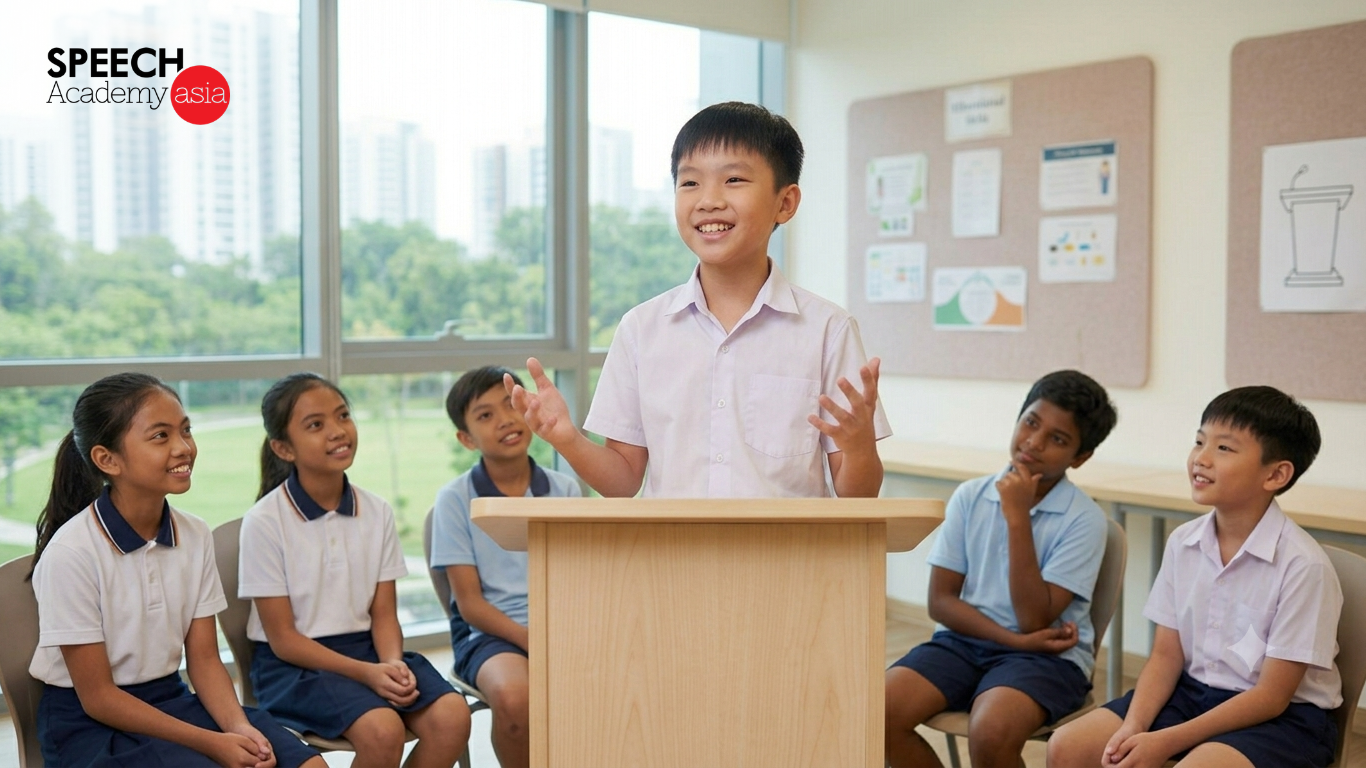
Have you ever watched your child confidently chat with family at home, only to become shy and quiet when asked to speak in front of a class?
You’re not alone.
Many children know what they want to say but struggle to express themselves confidently in front of others. Whether it is introducing themselves, answering a teacher’s question, giving a presentation or participating in Show and Tell, speaking in public can feel intimidating.
The good news is that confidence is not something children are simply born with. Like reading, writing or swimming, communication is a skill that can be learnt and developed through guidance and practice.
This is why many parents are enrolling their children in communication classes in Singapore. These programmes go beyond teaching children how to speak. They help them organise their thoughts, express ideas clearly, communicate with confidence and develop leadership skills that will benefit them for life.
If you are looking for ways to help your child become a more confident speaker, here are ten practical public speaking tips that every parent can encourage at home.
1. Start with a Strong Introduction
First impressions matter.
A confident introduction immediately captures attention and helps children feel more prepared before moving into the main part of their presentation.
Teach your child to begin by greeting the audience with a smile before introducing their topic.
For example:
“Good morning everyone. Today, I’d like to share with you about my favourite animal.”
Starting confidently often helps children settle their nerves and creates a positive impression from the very beginning.
2. Speak Slowly and Clearly
When children become nervous, they often rush through their presentation.
Speaking too quickly makes it difficult for listeners to understand the message and may cause children to lose track of their own thoughts.
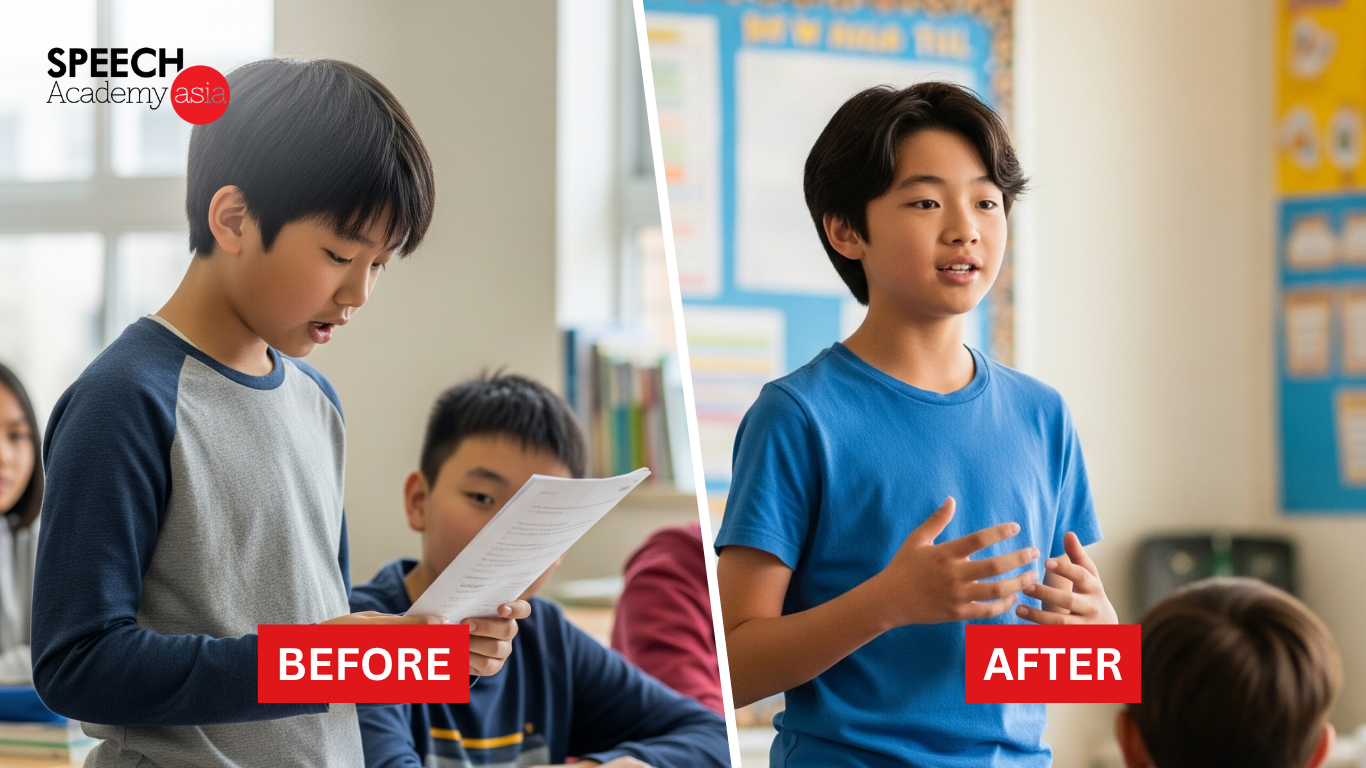
Encourage your child to imagine they are having a conversation rather than racing through memorised lines. Pausing naturally between ideas gives both the speaker and audience time to process the information.
Remember, speaking slowly does not make a child sound less confident. In fact, it often makes them appear more composed and mature.
3. Make Eye Contact with Your Audience
Eye contact helps children build a connection with their audience.
Rather than staring at the floor, ceiling or presentation slides, encourage your child to look at different people around the room while speaking.
For younger children, a simple exercise is to practise speaking to different family members during dinner or storytelling sessions.
As children become more comfortable, maintaining eye contact will become second nature and significantly improve their stage presence.
4. Use Natural Body Language
Communication is about much more than words.
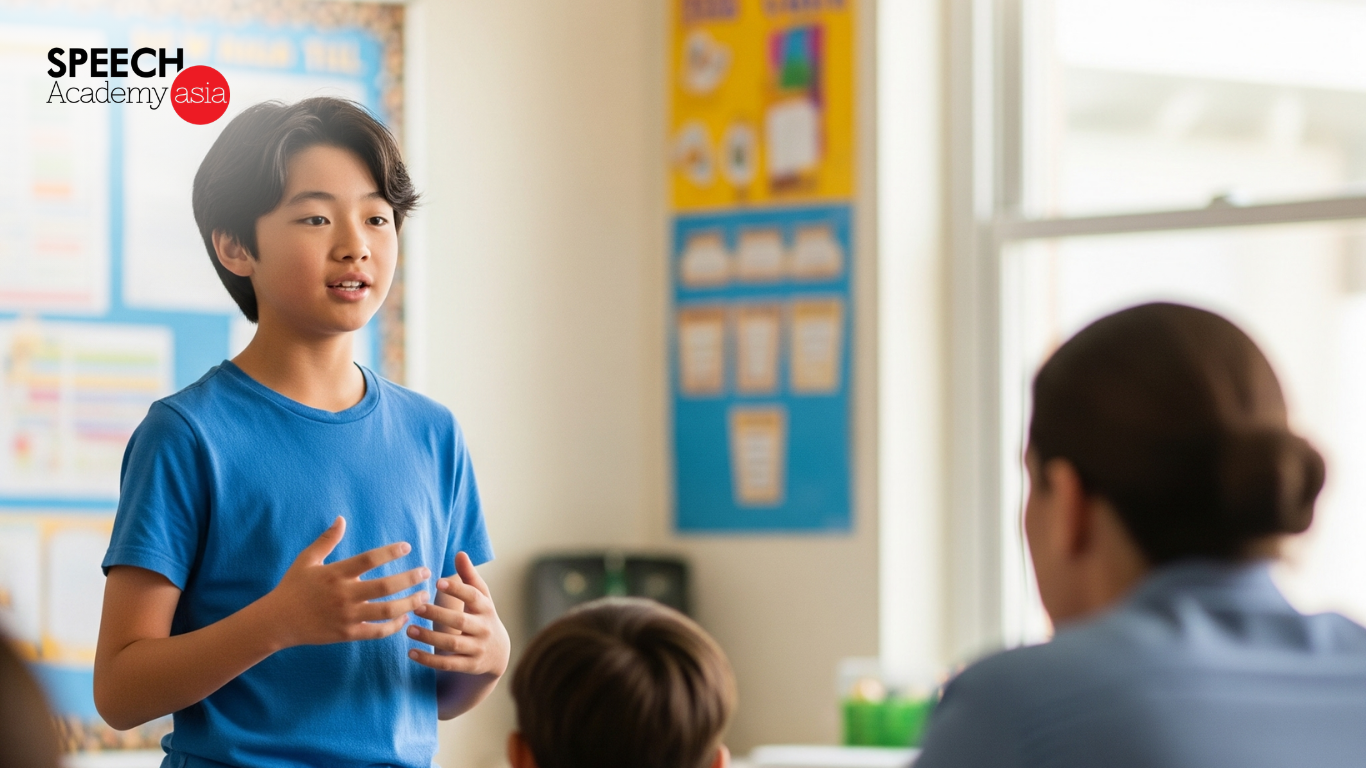
Facial expressions, posture and hand gestures all contribute to how a message is received.
Encourage your child to:
- Stand upright.
- Smile naturally.
- Use hand gestures to emphasise key points.
- Avoid putting their hands in their pockets or crossing their arms.
Natural body language helps children appear more confident, even if they still feel slightly nervous inside.
5. Focus on Understanding Instead of Memorising
Many children believe they need to memorise every word of their speech.
Unfortunately, this often leads to panic when they forget a sentence.
Instead, encourage your child to understand the key ideas they want to communicate.
When children understand their content, they can explain it naturally in their own words. This makes presentations sound more authentic and allows them to recover more easily if they lose their place.
Great speakers communicate ideas, not scripts.
6. Tell Stories to Make Presentations More Engaging
Everyone enjoys listening to stories.
Instead of simply listing facts, encourage your child to include a personal experience, an interesting example or a relatable situation.
For example, rather than saying:
“Dogs are loyal pets.”
They could say:
“When I was feeling unwell, my pet dog stayed beside me the whole day. That was when I realised how loyal dogs can be.”
Stories help audiences remember information while making presentations more enjoyable and meaningful.
8. Organise Thoughts Before Speaking
One reason children lose confidence is because they are unsure what to say next.
Before presenting, encourage them to organise their ideas into three simple sections:
- Beginning
- Middle
- Ending
This straightforward structure helps children stay focused and communicate their ideas logically.
As they grow older, they can gradually learn more advanced presentation techniques, but mastering a clear structure is an excellent starting point.
8. Practise Regularly in Everyday Situations
Confidence grows through consistent practice.
Children do not become confident speakers overnight, just as they do not become confident swimmers after one lesson.
Parents can create simple speaking opportunities every day by asking children to:
- Share what they learnt in school.
- Explain how to play their favourite game.
- Recommend a book they recently enjoyed.
- Describe a family outing.
- Tell a story during dinner.
These everyday conversations gradually build confidence without children even realising they are practising.
9. Learn to Manage Nervousness
Feeling nervous before speaking is completely normal.
Even experienced speakers still experience butterflies before important presentations.
Rather than trying to eliminate nervousness completely, teach your child how to manage it.
Simple strategies include:
- Taking slow, deep breaths.
- Smiling before beginning.
- Standing confidently.
- Focusing on sharing ideas rather than being perfect.
- Remembering that mistakes are part of learning.
When children realise that nervousness is normal, they become more willing to step outside their comfort zone.
10. Join a Structured Communication Class
While parents play an important role in encouraging communication at home, children often make faster progress when guided by experienced trainers.
A structured communication class provides opportunities for children to:
- Speak regularly in front of others.
- Receive personalised feedback.
- Build confidence through progressive challenges.
- Learn from peers.
- Develop leadership and presentation skills.
- Improve critical thinking and communication techniques.
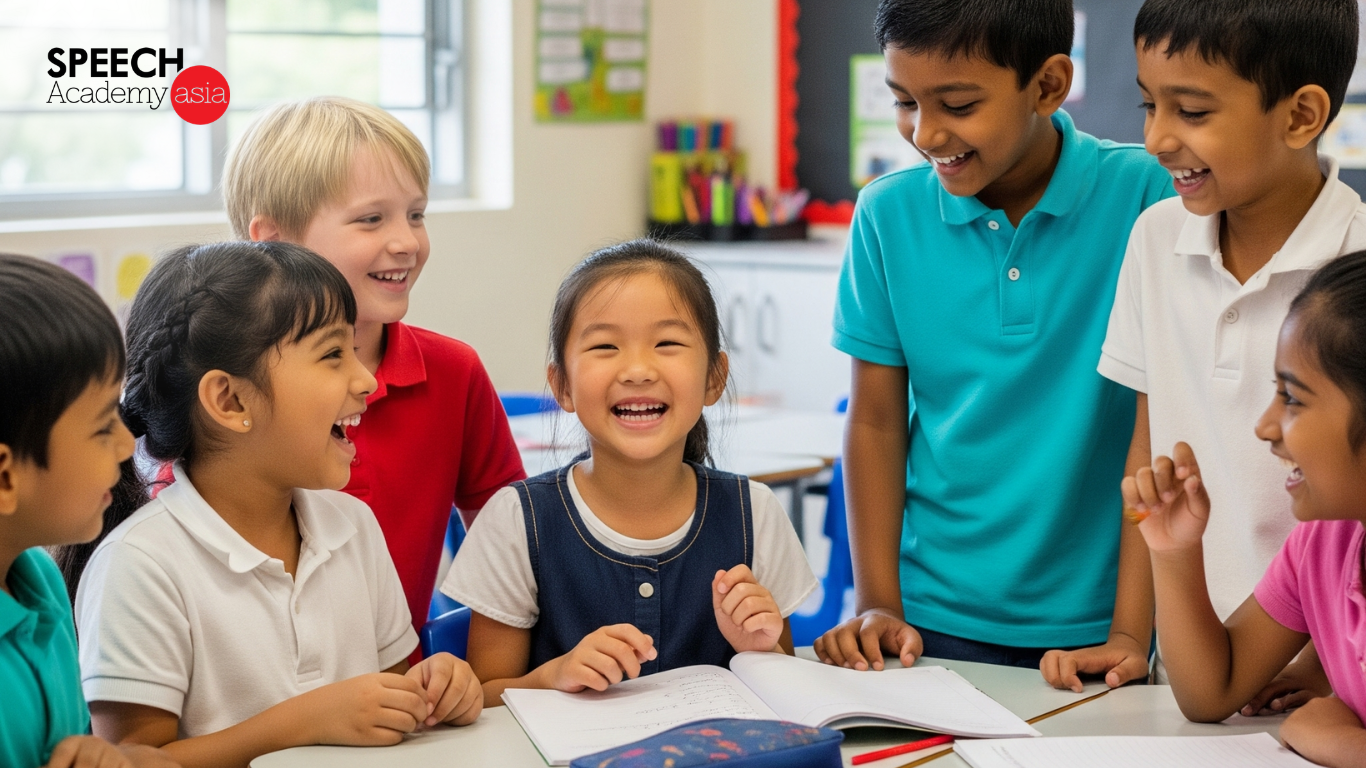
Perhaps most importantly, children discover that speaking confidently can be enjoyable rather than frightening.
With consistent coaching and encouragement, even shy children can become confident communicators
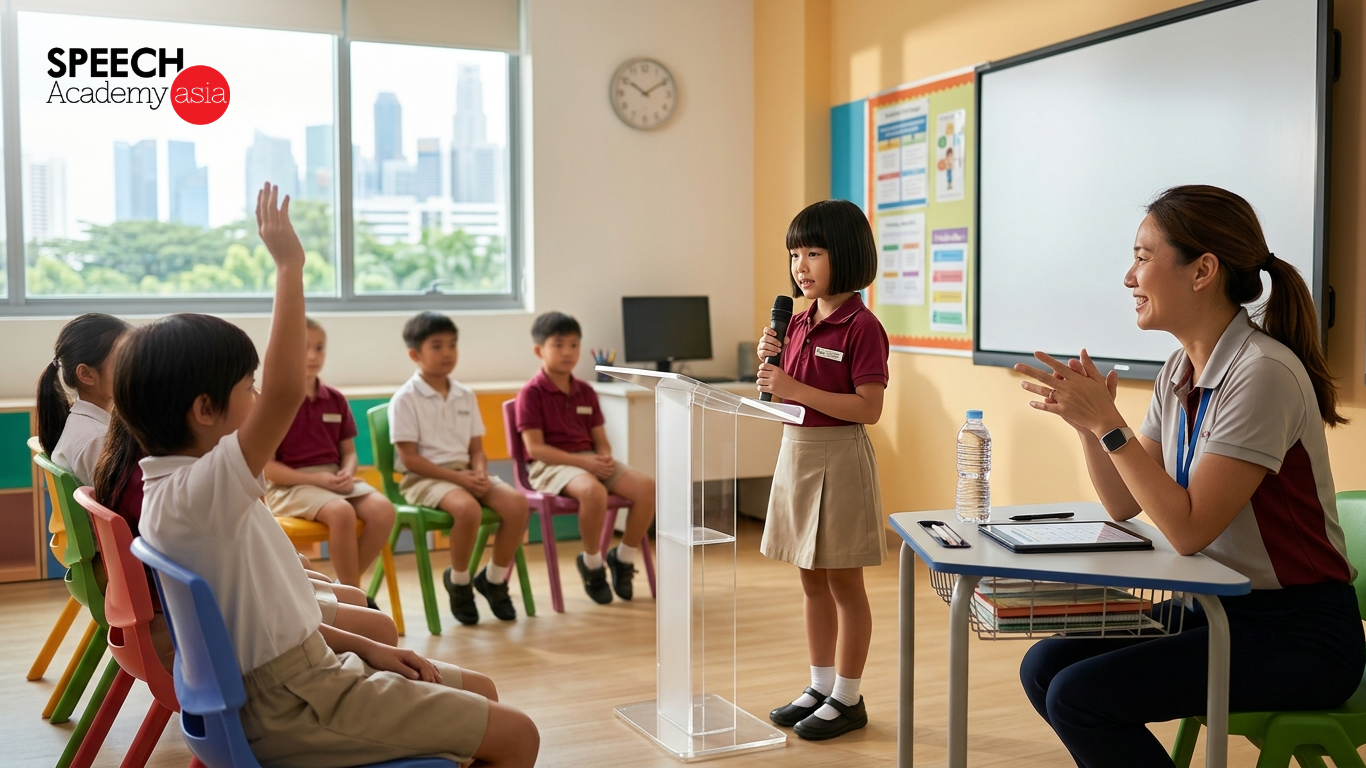
How to Choose the Right Communication Class in Singapore
With so many enrichment programmes available, parents may wonder which communication class is most suitable.
Here are a few factors to consider before enrolling your child.
Age-Appropriate Curriculum
Young children learn differently from teenagers.
Look for programmes that adapt teaching methods to each developmental stage rather than using the same lessons for every age group.
Interactive Learning
Children learn communication best by speaking, participating and receiving feedback.
Avoid programmes that rely heavily on lectures or worksheets.
Qualified Trainers
Experienced trainers know how to encourage children while gradually building confidence in a supportive environment.
Opportunities to Present
Regular presentations, storytelling activities and group discussions help children apply what they learn in real-life situations.
Structured Progression
Communication is a lifelong skill.
Choose a programme with a clear curriculum that develops children’s abilities step by step over time.
Why Parents Choose Speech Academy Asia
At Speech Academy Asia, we believe every child has the potential to become a confident communicator.
Since 2012, we have trained more than 10,000 students and partnered with over 300 MOE schools, educational institutions, organisations and brands across Singapore and the region.
Our programmes are designed for children aged 3 to 16 and combine communication, confidence-building and leadership development through engaging, interactive lessons.
Students develop essential skills including:
- Public speaking
- Presentation skills
- Storytelling
- Critical thinking
- Leadership communication
- Voice projection
- Persuasive speaking
- Social communication
- Interview skills
Through our proprietary Speech Linguistics Pattern™, children learn practical communication strategies that prepare them not only for school presentations and oral examinations, but also for future academic and professional success.
Frequently Asked Questions
At what age should my child start communication classes?
Children can begin developing communication skills as early as three years old through age-appropriate activities such as storytelling, role play and interactive games.
Are communication classes only for shy children?
Not at all.
Confident children also benefit by learning leadership, persuasive speaking and presentation skills that prepare them for future opportunities.
Will communication classes help with school?
Yes. Many students become more confident during Show and Tell, classroom discussions, project presentations and oral examinations after receiving structured communication training.
How long does it take to see improvement?
Every child progresses differently. With regular practice and consistent coaching, parents often notice improvements in confidence, participation and communication over the course of several months.
Give Your Child the Confidence to Speak, Lead and Succeed
Strong communication skills open doors throughout life.
Whether your child is introducing themselves in preschool, presenting a project in primary school or preparing for leadership opportunities in secondary school, the ability to communicate confidently will always be an advantage.
By encouraging regular practice, creating opportunities to speak at home and enrolling your child in the right communication class, you are giving them skills that extend far beyond the classroom.
After all, confident communication is not just about speaking well. It is about helping children believe in themselves, express their ideas with clarity and grow into future leaders who are ready to make their voices heard.
📲 Call or WhatsApp: 9061 1715
📍 Visit Us: JEM, 52 Jurong Gateway Road, #06-01, Singapore 608550
📧 Email: info@speechacademyasia.com
Free Trial Registration
Empowering 10,000 Kids and Counting: Boost Your Child’s Confidence and Communication Skills with our Free Trial! Our Public Speaking programme builds vital public speaking and interview skills as well as your child's confidence. Equip your child with the ability to overcome stage fright, present themselves confidently and leave a lasting impression. Investing in these skills early can have immense long-term benefits! Register today!