


DSA Preparation Course in Singapore: How to Stand Out and Secure Your Dream School
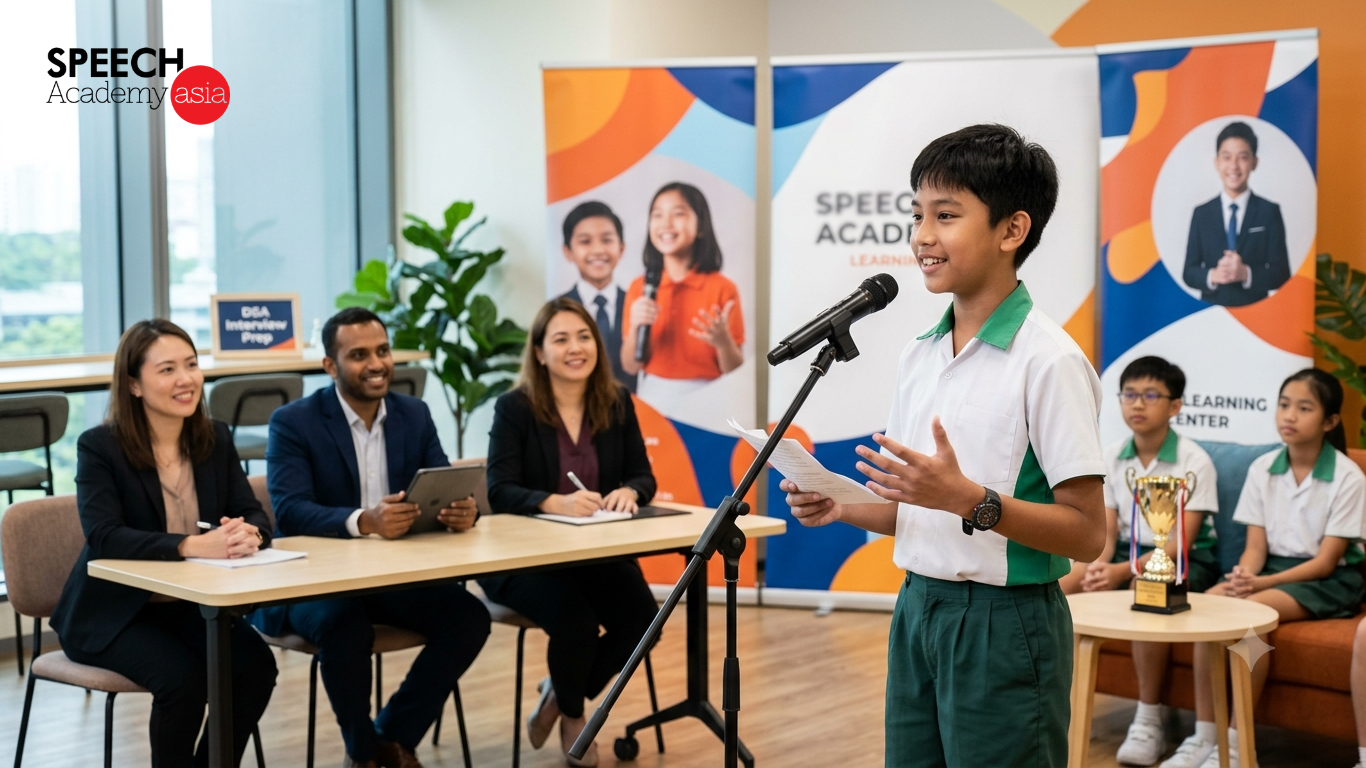
For many Primary 5 and Primary 6 students in Singapore, the Direct School Admission (DSA) exercise presents an exciting opportunity to gain admission into their preferred secondary school based on their talents, leadership potential, communication skills, and achievements. However, with thousands of students competing for limited places every year, preparation is what separates confident candidates from the rest.
A structured DSA Preparation Course helps students develop the communication, interview, presentation, and critical thinking skills required to excel during the DSA selection process. While academic results remain important, schools are increasingly looking for students who demonstrate confidence, leadership, resilience, and the ability to communicate effectively during interviews, auditions, presentations, and group discussions.
At Speech Academy Asia, we specialise in helping students maximise their DSA potential through proven communication methodologies, personalised coaching, and extensive interview practice. Whether your child is applying under leadership, public speaking, performing arts, debate, or other talent domains, our comprehensive DSA coaching programme equips them with the confidence to shine.
If you’re looking for a trusted DSA Preparation Course in Singapore, you’ve come to the right place.
What is the Direct School Admission (DSA) Exercise?
The Direct School Admission (DSA-Sec) exercise allows students to secure a place in selected secondary schools before the PSLE results are released. Instead of relying solely on academic performance, schools assess students based on specific talents such as:
- Leadership
- Public Speaking
- Debate
- Performing Arts
- Sports
- STEM
- Music
- Languages
- Visual Arts
- Uniformed Groups
- Community Service
Depending on the school and talent area, students may be required to undergo:
- Individual interviews
- Group discussions
- Public speaking presentations
- Impromptu speeches
- Portfolio presentations
- Auditions or practical assessments
- Question-and-answer sessions
Many schools specifically assess how well students communicate their ideas, demonstrate confidence, and respond under pressure.
Why Do Communication Skills Matter So Much for DSA?
Many students possess excellent achievements but struggle during interviews.
Common challenges include:
- Speaking too softly
- Giving one-word answers
- Losing confidence under pressure
- Poor eye contact
- Nervous body language
- Inability to elaborate on experiences
- Forgetting key examples
- Difficulty answering unexpected questions
Schools aren’t only evaluating what students have achieved.
They are evaluating:
- Confidence
- Authenticity
- Leadership qualities
- Emotional maturity
- Critical thinking
- Passion
- Communication ability
A well-prepared student can confidently showcase their strengths instead of letting nerves hold them back.
Why Enrol in a DSA Preparation Course?
Many parents assume practising interview questions at home is sufficient.
However, DSA interviews are often unpredictable.
Students may encounter:
- Scenario-based questions
- Leadership challenges
- Ethical dilemmas
- Impromptu speeches
- Group discussions
- Reflection questions
- Portfolio discussions
Professional coaching prepares students to think on their feet while communicating confidently.
A structured DSA Preparation Course provides:
1. Interview Preparation
Students learn how to:
- Introduce themselves naturally
- Structure answers clearly
- Showcase achievements confidently
- Handle difficult questions
- Build rapport with interviewers
2. Public Speaking Skills
Students develop:
- Vocal projection
- Clear pronunciation
- Voice modulation
- Effective pacing
- Persuasive communication
- Audience engagement
These skills are invaluable during speeches and presentations.
3. Leadership Communication
Leadership isn’t just about holding positions.
Students learn how to articulate:
- Their leadership philosophy
- Challenges they’ve overcome
- Team experiences
- Conflict resolution
- Initiative and responsibility
4. Critical Thinking
Many DSA interviews include opinion-based questions such as:
“What would you do if your team disagreed with your decision?”
“What qualities make a good leader?”
“How would you improve your school?”
Students learn structured frameworks for answering confidently.
5. Managing Nervousness
One of the biggest obstacles is anxiety.
Through repeated practice, mock interviews, and constructive feedback, students become increasingly comfortable speaking under pressure.
Why Start DSA Preparation Early?
One of the biggest mistakes parents make is waiting until interview invitations arrive.
Strong DSA preparation should ideally begin several months in advance to allow students time to:
- Build confidence gradually
- Improve communication habits
- Refine interview techniques
- Develop stronger presentation skills
- Receive personalised feedback
- Practise with realistic mock interviews
Students who prepare early tend to appear more natural and authentic during interviews.
What Makes Speech Academy Asia’s DSA Preparation Course Different?
Speech Academy Asia has helped thousands of students across Singapore develop confidence through structured communication programmes.
Our DSA Preparation Course goes beyond practising interview questions.
Students undergo holistic communication coaching that develops lifelong speaking skills.
Highlights include:
Personalised Coaching
Every child communicates differently.
Our trainers tailor coaching to:
- Personality
- Confidence level
- Strengths
- Areas for improvement
- Target schools
- DSA talent domains
Mock DSA Interviews
Students experience realistic interview simulations with constructive feedback on:
- Content
- Delivery
- Confidence
- Eye contact
- Body language
- Voice projection
Repeated practice significantly improves performance.
Speech Linguistic Patterns™ Methodology
Speech Academy Asia’s proprietary Speech Linguistic Patterns™ methodology equips students with techniques to:
- Structure responses logically
- Speak persuasively
- Maintain composure
- Influence through effective communication
- Build authentic confidence
B.E.S.T.™ Communication Framework
Students also learn Speech Academy Asia’s signature B.E.S.T.™ Model:
- Body Language
- Emotions
- Sentence structure
- Tonality
Together, these elements create powerful and confident communicators.
Skills Students Develop During the DSA Course
Students strengthen essential competencies including:
- Interview skills
- Public speaking
- Presentation skills
- Leadership communication
- Critical thinking
- Storytelling
- Active listening
- Confidence building
- Persuasive speaking
- Spontaneous speaking
- Emotional regulation
- Professional etiquette
These skills continue benefiting students throughout secondary school, junior college, university, and eventually their careers.
Who Should Join This DSA Preparation Course?
This programme is suitable for students applying through:
- Leadership
- Public Speaking
- Debate
- Performing Arts
- Languages
- Student Council
- Community Leadership
- STEM interviews
- Scholarship interviews
- School leadership programmes
Even students who are unsure about applying for DSA will benefit from developing strong communication skills early.
What Happens During a Typical Lesson?
Lessons are highly interactive and practical.
Students participate in:
- Mock interviews
- Public speaking exercises
- Impromptu speeches
- Group discussions
- Leadership activities
- Video playback and coaching
- Personalised trainer feedback
- Confidence-building activities
Rather than memorising model answers, students learn how to think independently and communicate authentically.
Common DSA Interview Questions Students Practise
Students may prepare for questions such as:
- Tell us about yourself.
- Why do you want to join our school?
- What makes you different from other applicants?
- Describe a leadership experience.
- Tell us about a challenge you’ve overcome.
- How do you handle failure?
- What are your strengths and weaknesses?
- What would your teachers say about you?
- Why should we choose you?
Students also learn how to answer unexpected follow-up questions confidently.
What Does Our DSA Preparation Course Cover Each Month?
Speech Academy Asia’s DSA course is for Primary 5 and 6 students. Classes run 4 lessons a month, 1.5 hours each, and work through our own DSA Workbook of 81 commonly asked interview questions in five categories: introductory, philosophical, value-add, fun and CCA-based.
| Module | Delivery skills | Interview questions practised |
|---|---|---|
| 1. The Basics | Eye contact, posture and gestures | “Tell me about yourself”, “What are your strengths?” |
| 2. Contributing to Your Chosen School | Voice, tone and sentence stress | Value-add questions about what your child can bring to the school |
| 3. Getting Philosophical | Power posing for nerves and the “Yes, and…” game for thinking on your feet | Reflective questions with no model answer |
| 4. Creative Thinking Through Fun Prompts | A quickfire interview using three random words | Fun and CCA-based questions |
What Happens in a DSA Interview Workshop?
Alongside the monthly course, we run intensive DSA interview workshops before the selection period. In a workshop, students:
-
Learn interview etiquette, from greeting the panel to what to wear and bring
-
Research their target schools so answers match each school’s programmes and values
-
Turn their achievements into short stories that show character, not just results
-
Practise group discussions, where many students either dominate or stay silent
-
Sit full mock interviews with feedback on content, delivery, eye contact and voice
What Is the Most Common DSA Interview Mistake We See?
Answering “Why our school?” with “Your school is the best in Singapore” or “My parents want me to come here.” Interviewers hear this all the time. In class, we help each student name a specific programme or CCA the school offers and explain why it matters to them. Honest, specific answers that sound like the child always beat a polished script.
Students can also take Trinity College London communication exams with us, which add a recognised qualification to a DSA portfolio. For dates, talent areas and what schools look for, read our DSA-Sec guide for parents, or see the DSA interview preparation course page.
Frequently Asked Questions About Our DSA Preparation Course
Who is the DSA preparation course for?
Primary 5 and 6 students applying for DSA-Sec in any talent area, including leadership, public speaking, debate, the arts, sports and STEM.
How long is the DSA course?
Classes run 4 lessons a month, 1.5 hours each. Many families start in Primary 5 so there is time to cover all question categories before applications open in May.
How many DSA interview questions will my child practise?
81 commonly asked questions from our DSA Workbook, grouped into introductory, philosophical, value-add, fun and CCA-based categories.
Will my child memorise model answers?
No. Students learn structures such as PREP and practise with real examples from their own lives, so answers stay genuine and they can handle follow-up questions.
Can my child try a class first?
Yes. Book a free trial class and our team will arrange a session.
Long-Term Benefits Beyond DSA
The value of communication extends far beyond school admissions.
Students who complete structured public speaking and interview coaching often become more confident in:
- Classroom presentations
- Oral examinations
- Student leadership
- Competitions
- Debates
- Scholarship interviews
- University admissions
- Future job interviews
Communication remains one of the most valuable life skills for academic and professional success.
Why Parents Choose Speech Academy Asia
Parents trust Speech Academy Asia because of our:
- Proven communication curriculum
- Experienced trainers
- Proprietary teaching methodologies
- Personalised coaching approach
- Practical interview simulations
- Focus on confidence and leadership development
- Strong track record of helping students become confident communicators
Our programmes are designed not only to prepare students for DSA but also to equip them with communication skills that will serve them throughout life.
Give Your Child the Confidence to Excel
The DSA journey can be competitive, but confidence, preparation, and communication often make the biggest difference.
Rather than relying on memorised answers, equip your child with the skills to think critically, speak confidently, and present themselves authentically.
At Speech Academy Asia, our comprehensive DSA Preparation Course empowers students to communicate with clarity, confidence, and conviction during every stage of the DSA selection process.
Whether your child is preparing months in advance or has already shortlisted schools, it’s never too early to build the communication skills that leave a lasting impression.
Start your child’s DSA journey with confidence today.
📲 Call or WhatsApp: 9061 1715
📍 Visit Us: JEM, 52 Jurong Gateway Road, #06-01, Singapore 608550
📧 Email: info@speechacademyasia.com
Free Trial Registration
Empowering 10,000 Kids and Counting: Boost Your Child’s Confidence and Communication Skills with our Free Trial! Our Public Speaking programme builds vital public speaking and interview skills as well as your child's confidence. Equip your child with the ability to overcome stage fright, present themselves confidently and leave a lasting impression. Investing in these skills early can have immense long-term benefits! Register today!