


How to Rebut in a Debate: A Simple Guide for Kids and Teens
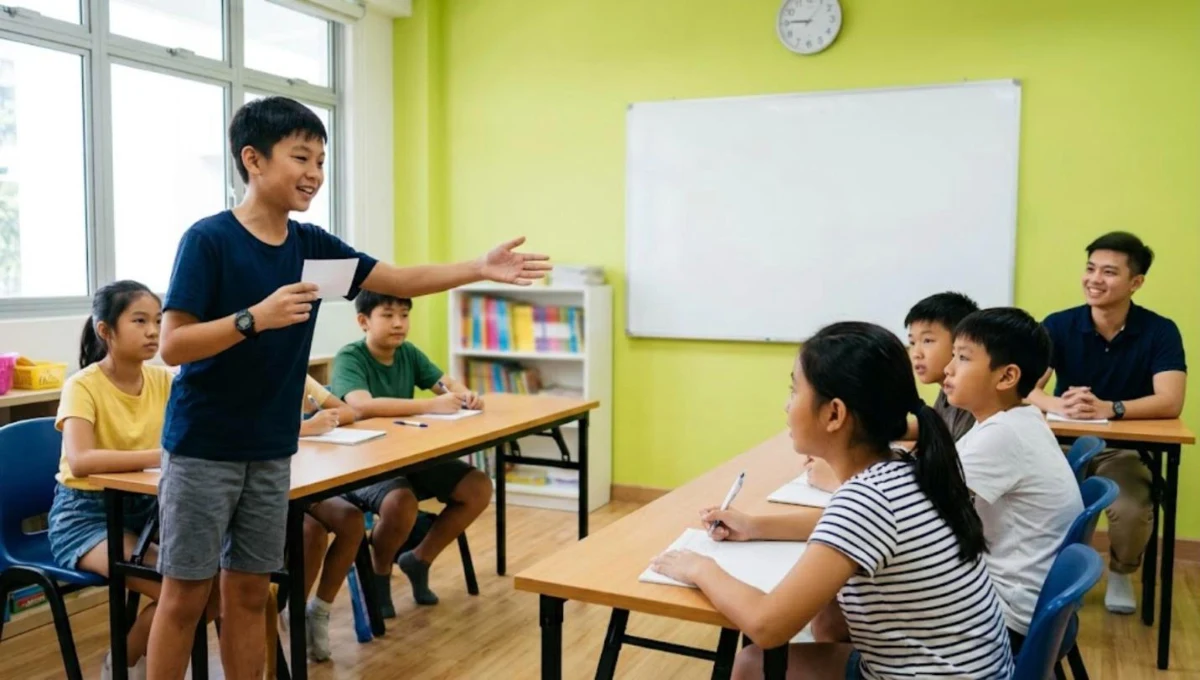
To rebut in a debate, you listen carefully to the other side, pick their most important point, and explain clearly why it is wrong, weak or less important than your own. A simple way to do this is to say what they claimed, explain the problem with it, and show why your side still wins. At Speech Academy Asia, we have taught speaking skills to children and teens in Singapore since 2012. This guide shares the rebuttal techniques our trainers use in our debate classes.
What Is a Rebuttal in a Debate?
A rebuttal is your answer to the other team’s argument. While your own points explain why your side is right, a rebuttal explains why the other side’s points do not hold up.
Rebuttal matters because a debate is not two separate speeches. It is a conversation between two sides. If the other team makes a strong point and nobody answers it, the judges will assume you agree with it. In class, we put it simply: if you leave a point unanswered, you have agreed with your opponent.
Why Is It Hard to Rebut in a Debate?
Rebuttal is often the hardest skill for young debaters. Unlike your own points, you cannot fully prepare it at home. Instead, you must listen, think and respond in real time.
Many students also find it uncomfortable to disagree out loud. Some feel nervous, while others get too emotional and start attacking the speaker instead of the argument. The good news is that both problems improve with a clear method and lots of friendly practice.
How Do You Listen for Points to Rebut in a Debate?
Good rebuttal starts with good listening. While the other team speaks, keep a simple note sheet with two columns: what they said, and what is wrong with it.
- Write keywords, not sentences. You only need enough to remember the point.
- Listen for their main claim. Most speakers repeat their most important point more than once.
- Mark weak spots as you go. A quick question mark next to a point reminds you to come back to it.
- Notice what is missing. Sometimes the best rebuttal is pointing out what the other side forgot to prove.
What Is a Simple Structure to Rebut in a Debate?
Young debaters do best with a short, repeatable pattern. We teach a four-step structure that works for almost any rebuttal:
| Step | What to say | Example |
|---|---|---|
| 1. Repeat | Briefly state their point | “The other side said homework should be banned because children need time to play.” |
| 2. Respond | Explain the problem with it | “But a small amount of homework still leaves plenty of time to play.” |
| 3. Prove | Give a reason, fact or example | “If homework takes 30 minutes, there is still the rest of the evening to play.” |
| 4. Show why it matters | Link back to your side | “So homework does not take away playtime, and it helps children practise what they learn.” |
Notice that the rebuttal never attacks the speaker. It only responds to the argument. That keeps the debate respectful, and it also looks more convincing to the judges.
Which Rebuttal Techniques Work Best?
Once students know the basic structure, they can try different ways to rebut in a debate. Here are five techniques we teach, starting with the easiest:
- Challenge the facts. Is the claim actually true? Ask for proof, or share a fact that shows otherwise.
- Challenge the logic. Does the conclusion really follow? For example, “Some students dislike homework” does not prove that homework is useless.
- Find the exception. Show that the point is not always true. One clear counter-example can weaken a big claim.
- Weigh it. Agree that the point has some truth, but show that your side’s benefits are bigger. For example, use advantages and disadvantages to compare both sides.
- Use statistics. A clear number is hard to argue with. Older students learn to find reliable facts and figures to back up their rebuttals.
How Can Students Rebut in a Debate Without Getting Nervous?
Even confident students can feel their heart race when it is their turn to rebut. A calm speaker sounds more convincing, so we train the body as well as the mind.
- Breathe before you stand. A few slow belly breaths calm the body. This is one of our Neuro Somatics™ techniques.
- Stand tall and plant your feet. Good posture helps you feel and look in control.
- Speak slower than you think you need to. Nervous speakers rush. A steady pace sounds more confident.
- Use a confident opening line. Start with “The other side said…” so you always know your first words.
Our B.E.S.T Model™ helps students polish their delivery. It covers Body language, Emotions, Sentence structure and Tonality, so a strong rebuttal also sounds strong.
What Are Common Mistakes When You Rebut in a Debate?
| Common mistake | Better approach |
|---|---|
| Attacking the speaker, not the argument | Talk about what they said, never about who they are |
| Trying to answer every small point | Focus on the one or two points that matter most |
| Saying “That’s wrong” without a reason | Always explain why, using “because” |
| Only rebutting and forgetting your own points | Balance rebuttal with building your own case |
| Getting emotional or loud | Stay calm and polite, since judges reward respectful debaters |
How Can Parents Help Children Practise Rebuttal at Home?
You do not need a debate club to practise. Everyday conversations are full of chances to rebut in a debate-style way.
- Play “Pro vs Con”. Pick a fun topic, such as “Should children have a later bedtime?” Each person lists reasons for one side, then takes turns rebutting.
- Swap sides. Ask your child to argue the side they disagree with. This builds flexible thinking.
- Use the dinner table. When your child makes a claim, gently ask, “Is that always true?” or “What would someone who disagrees say?”
- Film a short practice. Watching a 30-second rebuttal on video helps children spot habits like rushing or looking down.
Keep it light and fun. The goal is to build confidence, not to win every argument at home.
Why Are Rebuttal Skills Useful Beyond Debate?
Learning to rebut teaches children to listen carefully, think critically and disagree respectfully. These skills match the critical thinking and communication goals in Singapore’s 21st Century Competencies.
They also help in school. The PSLE oral asks students to give opinions with reasons and respond to follow-up questions, which is very close to what debaters do. Our PSLE oral classes build on these same habits. Later on, the ability to respond calmly to a different view helps in interviews, group projects and the workplace.
How Does Speech Academy Asia Teach Debate?
Our debate classes for kids and teens teach students to build arguments, use evidence and rebut with confidence. Lessons are hands-on, with fun topics, team debates and contests that make practice feel like a game.
If your child is not ready for debate yet, our public speaking classes for kids are a great place to start building confidence in front of an audience.
Frequently Asked Questions About How to Rebut in a Debate
What is the difference between a rebuttal and an argument?
An argument is a point that supports your own side. A rebuttal is a response that shows why the other side’s point is wrong, weak or less important. Strong debaters do both: they build their own case and take apart the other team’s case.
How long should a rebuttal be?
For young debaters, one or two strong rebuttals of about 30 seconds each are better than many rushed ones. Older students in formal debates often spend the first part of their speech on rebuttal before moving to their own points. Quality matters more than quantity.
Can young children learn to rebut?
Yes. Children as young as six can learn the basic idea with simple, fun topics, such as whether dogs make better pets than cats. They start by spotting one thing the other side said and explaining why they disagree, using the word “because”.
What if I cannot think of a rebuttal?
Ask simple questions about the other side’s point. Is it true? Does it matter? Does it always happen? Even one honest answer to these questions can become a rebuttal. Over time, practice makes these questions automatic.
Learning to rebut in a debate takes practice, but the method is simple. Listen closely, pick the most important point, explain the problem with it and show why your side still wins. Most of all, stay calm and respectful. If you would like your child to build these skills with a trainer, book a free trial class with us.
👉 Book a Free Trial Class
📲 Call or WhatsApp: 9061 1715
📍 Visit Us: JEM, 52 Jurong Gateway Road, #06-01, Singapore 608550
📧 Email: info@speechacademyasia.com
Free Trial Registration
Empowering 10,000 Kids and Counting: Boost Your Child’s Confidence and Communication Skills with our Free Trial! Our Public Speaking programme builds vital public speaking and interview skills as well as your child's confidence. Equip your child with the ability to overcome stage fright, present themselves confidently and leave a lasting impression. Investing in these skills early can have immense long-term benefits! Register today!