


Public Speaking Workshop for Students in Singapore: What to Expect and How to Choose One
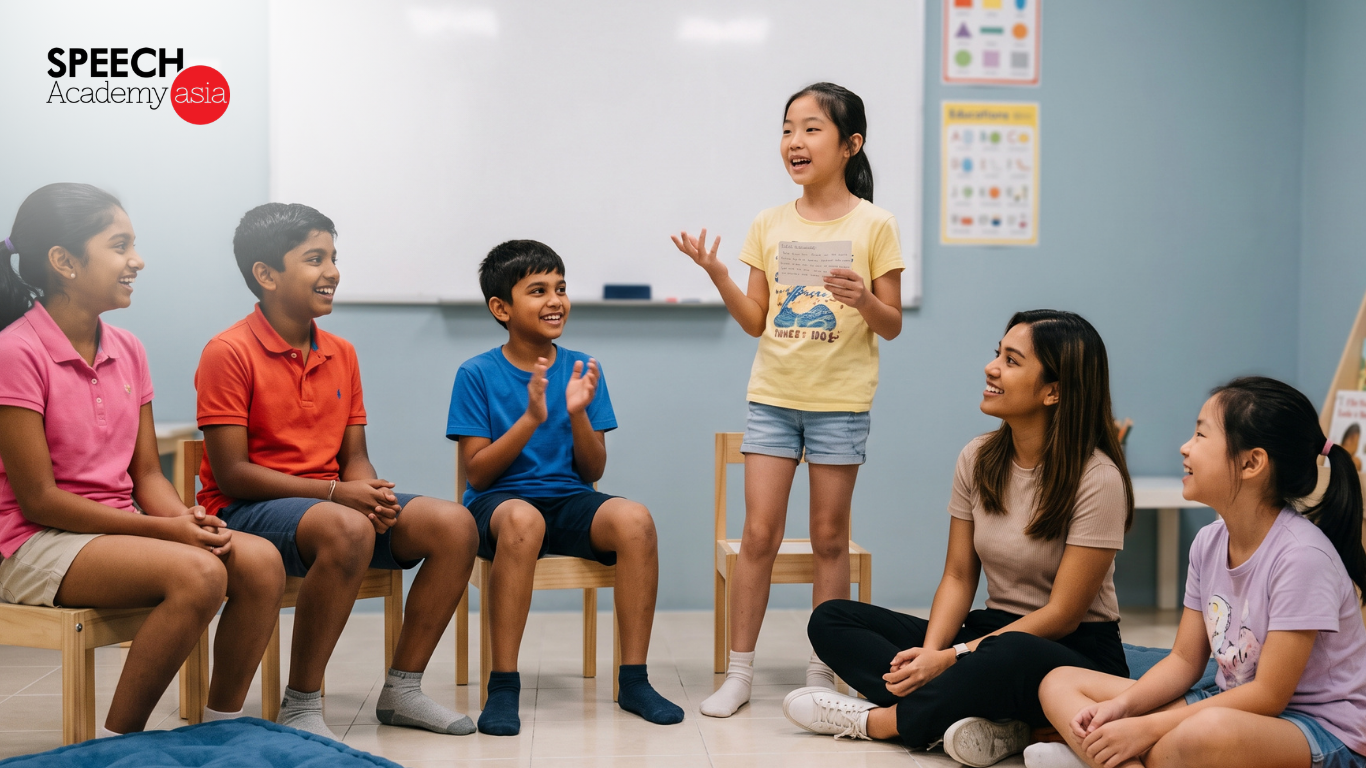
Many parents first look for a public speaking workshop for students in Singapore after a specific moment: a school presentation that didn’t go well, an upcoming DSA interview, or simply noticing their child clams up whenever they’re asked to speak in front of others.
A workshop is often the starting point. It’s shorter and more focused than a full course, and it’s a practical way to introduce speaking skills and see how a child responds before committing to a longer programme. This guide covers what a public speaking workshop actually involves, how it differs from a full course, and what to look for when choosing one.
What Is a Public Speaking Workshop?
A public speaking workshop is a short, focused training session, usually a single day, a weekend, or a few sessions during the school holidays, that teaches core speaking skills such as voice projection, body language, structuring ideas and managing nervousness in front of an audience.
Workshops are typically used for:
- Building initial confidence and exposure before a bigger commitment
- Preparing for a specific event, such as a school presentation, DSA interview or competition
- School holiday enrichment
- Introducing a child to public speaking training for the first time
Workshop vs Course: Which Is Right for Your Child?
This is the most common question parents have, and the answer usually comes down to goal and timeline.
A workshop is best when you want a short, practical introduction, for example ahead of a specific event, or as a low-commitment way to see whether your child enjoys this kind of training. A full course is best when you want to build public speaking as a long-term skill, with structured progression, formal assessment and repeated practice over time.
We’ve written in more detail about choosing the right public speaking course and about communication courses for students if you’re comparing the longer-term option.
What a Good Public Speaking Workshop Should Cover
Before signing up, check that the workshop actually covers practical, applicable skills rather than just a pep talk on confidence. Look for:
- Real speaking practice. Every student should get multiple turns speaking, not just watch a demonstration.
- Structured content. Voice, body language, structuring ideas and handling nervousness, not a single vague theme.
- Small group sizes. So each student gets individual feedback and speaking time.
- Age-appropriate delivery. Activities suited to the child’s age and school level.
- A trainer with genuine speaking or coaching experience, not just enthusiasm.
- A visible outcome, such as a short presentation at the end of the workshop, so students and parents can see concrete progress.
Why Public Speaking Skills Matter Early
Public speaking is not just an extracurricular nice-to-have in Singapore’s school system. It’s formally assessed. Since the 2025 PSLE, the oral component now makes up 20% of the total English grade, up from 15% previously, and carries more weight than Continuous Writing. That shift reflects a broader emphasis across MOE’s English syllabus on expressing ideas clearly and confidently, not just in exams but in class presentations and group work throughout the school year.
Starting workshop-based practice early gives students low-pressure repetition: speaking in front of a small group, receiving feedback, and trying again, well before the stakes are as high as an oral exam or interview.
Inside a Speech Academy Asia Public Speaking Workshop
SAA’s workshops draw from the same Speech Linguistic Patterns™ (SLP™) framework used across our full 10-Year Series of Public Speaking™ curriculum, a system of over 1,000 techniques covering voice, body language and delivery, adapted into a shorter, focused format. Depending on the run, this includes:
- Guided speaking practice with real-time trainer feedback
- Small-group activities so every student gets multiple turns to speak
- A short closing presentation, giving students and parents a visible marker of progress
- School holiday runs as well as ongoing weekly options for students who want to continue afterwards
Workshops are run by trainers within a methodology built by co-founders Kelvin Tan, a master trainer and former competitive storyteller, and Lukas Seet, a certified NLP Master Practitioner training in public speaking since 2003. SAA has delivered this training to students from 300+ MOE schools across Singapore, and has been featured on Mediacorp (CNA, 938LIVE, Suria) and in The Straits Times.
Who Should Join a Public Speaking Workshop?
- Younger children (7 to 9 years old) as a gentle, low-pressure introduction to speaking in front of others
- Upper primary students ahead of oral exams, class presentations, or DSA interviews
- Secondary school students to prepare for CCA leadership roles, project presentations, or debate and public speaking competitions
- First-time participants as a way to try public speaking training before committing to a full course
Frequently Asked Questions
How long is a typical public speaking workshop?
Most workshops run from a single day to a few sessions over a school holiday period, typically a few hours per session. This differs from a full course, which runs over months with regular weekly sessions.
Is a one-day workshop enough to see improvement?
A single workshop is usually enough to build initial confidence and introduce core techniques, but lasting improvement in public speaking, such as consistent delivery under pressure, typically comes from ongoing, structured practice over a longer period.
What age is suitable for a public speaking workshop?
Workshops can be adapted for children as young as 7, through to secondary school students. Content and activities are adjusted based on age and school level.
Do workshops help with school oral exams or DSA interviews?
Yes. Workshops that include structured speaking practice, voice projection and handling nervousness under pressure directly support oral exam performance and interview preparation, including DSA interviews.
What’s the difference between a public speaking workshop and a communication course?
A workshop is a short, focused session usually built around a specific outcome, such as exam preparation or an initial introduction to speaking skills. A communication course is a longer, more comprehensive programme that develops both speaking and everyday communication skills, such as listening and teamwork, over time.
Give Your Child a Confident Start
A public speaking workshop is a practical first step, whether your child is preparing for a specific event or simply needs low-pressure practice speaking in front of others.
Explore SAA’s Public Speaking programmes for Kids & Teens, including our workshop and school holiday options built on the 10-Year Series of Public Speaking™ curriculum.
👉 Book a Free Trial Class
📲 Call or WhatsApp: 9061 1715
📍 Visit Us: JEM, 52 Jurong Gateway Road, #06-01, Singapore 608550
📧 Email: info@speechacademyasia.com
Free Trial Registration
Empowering 10,000 Kids and Counting: Boost Your Child’s Confidence and Communication Skills with our Free Trial! Our Public Speaking programme builds vital public speaking and interview skills as well as your child's confidence. Equip your child with the ability to overcome stage fright, present themselves confidently and leave a lasting impression. Investing in these skills early can have immense long-term benefits! Register today!