


The PSLE Oral Exam Is Not Testing What You Think It Is
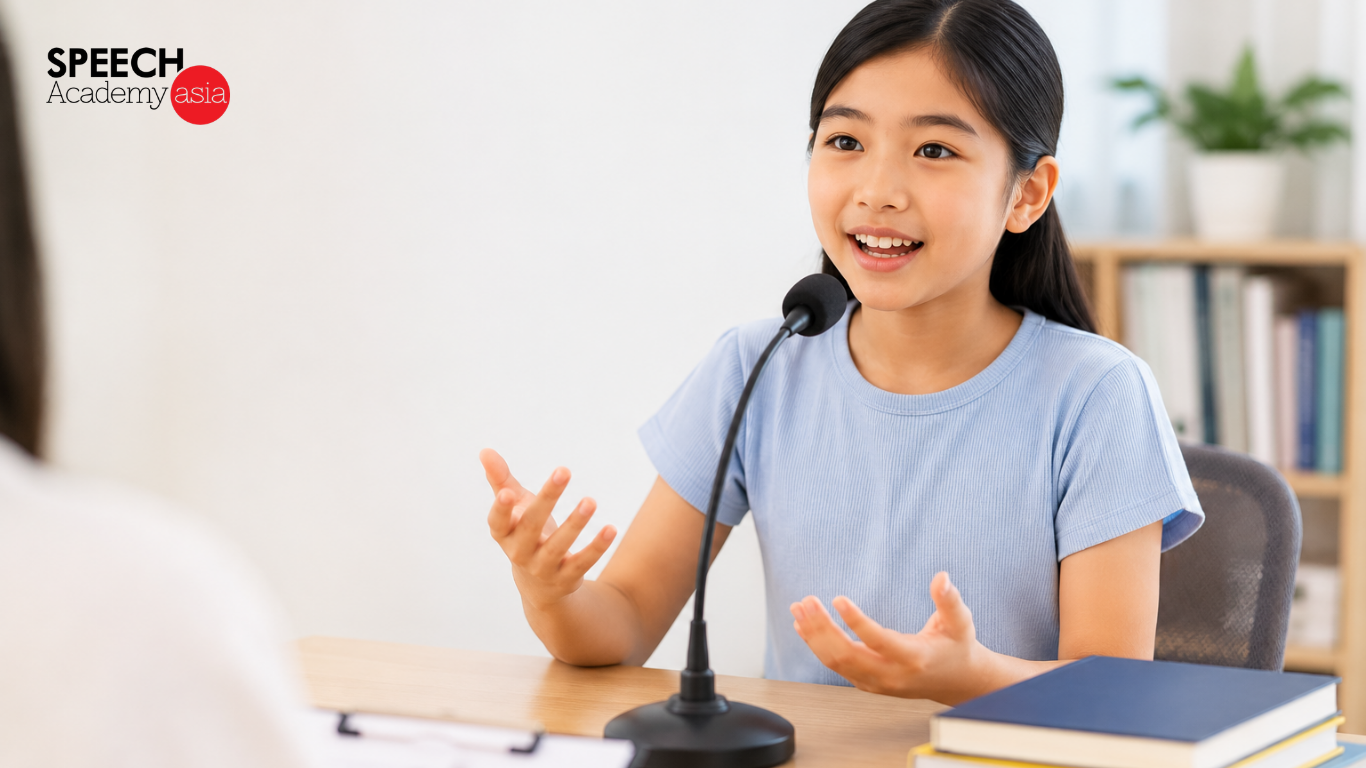
A common scene in many Singapore households: Your child reads the passage perfectly at home. No stumbles. Good pacing. Even good expressions.
Then exam day comes. They walk out and say, “I think I didn’t do very well… I forgot what to say.”
Parents are often confused because the child knows English. So why does oral suddenly feel like a different language? The truth is, the PSLE Oral Exam is not just testing English ability. It is testing communication under pressure. And that is a very different skill.
What the PSLE Oral Exam Is Really Designed to Assess
The Singapore Ministry of Education Singapore structures the English Oral component to assess how well students can communicate ideas clearly, fluently, and appropriately in real-time situations.
It is not a memory test. It is not about “model answers”. It is about whether a student can:
- Think quickly
- Speak clearly
- Stay calm under observation
- Express ideas in a structured way
In other words, it is closer to real-life communication than most written exams. Yet most students prepare for it like a reading test. That mismatch is where many lose marks.
Myth 1: “My child just needs to practise reading aloud”
This is one of the most common misunderstandings.
Reading aloud helps with pronunciation and fluency, but it does not prepare a child for the thinking required in stimulus-based conversation.
In the actual exam, students must interpret a visual, form an opinion, and respond instantly. That is not reading. That is decision-making under pressure.
A student can read beautifully and still struggle to answer a simple question like: “Do you agree with this situation? Why?”
Because now, they must think, organise, and speak at the same time.
Myth 2: “Good English students will naturally do well in oral”
Many parents assume strong students will automatically excel. But in reality, oral performance is often affected by confidence, not ability.
Educational research on language anxiety consistently shows that speaking tasks are more affected by stress levels than written tasks. When students feel evaluated in real time, their fluency can drop even if their knowledge is strong.
This is why some students who score well in composition may suddenly:
- Speak in short, incomplete sentences
- Rush their answers
- Freeze when asked follow-up questions
It is not a language problem. It is a performance problem.
Myth 3: “There is no real technique for oral, just speak normally”
This is where many students lose easy marks. Examiners are not looking for memorised scripts. But they are listening for structure, clarity, and control.
Strong oral responses usually have:
- A clear opinion
- A reason
- A simple example
- A natural closing statement
Most students, however, answer in a scattered way because they have never been taught how to structure speech on the spot. So even good ideas sound messy.
What Examiners Notice in the First 30 Seconds
In oral assessment, first impressions matter more than parents think.
Examiners typically notice:
- Whether the student is overly nervous
- Whether speech is rushed or steady
- Whether ideas are organised or jumping around
- Whether the voice is audible and confident
A well-prepared student does not necessarily speak “perfect English”. But they sound calm, controlled, and easy to follow. That is what creates higher scoring impressions.
Why Many Students Still Struggle Even With Tuition
This is a sensitive but important point. Not all tuition prepares students for oral effectively.
Many programmes still focus heavily on:
- Reading passages repeatedly
- Giving “model answers” to memorise
- Limited real-time speaking practice
But oral exams cannot be memorised. They require live thinking and responding, which is why students need guided practice that feels unpredictable and realistic.
Without that, students may still feel unprepared even after months of classes.
What Actually Builds Oral Confidence
Confidence in oral communication does not come from “knowing more words”. It comes from repetition in realistic conditions.
Students improve when they:
- Practise speaking without scripts
- Get immediate feedback on clarity and structure
- Learn how to organise thoughts quickly
- Experience exam-like pressure in a safe environment
As communication experts often highlight, fluency develops through frequent speaking attempts, not perfect speaking attempts.
Mistakes are part of the process. Avoidance is what slows progress.
Final Thought: Oral Is a Skill Your Child Can Train
Many parents only start focusing on oral preparation a few weeks before PSLE. By then, they are trying to fix their confidence under pressure in a very short time. But oral communication is one of the most trainable exam skills.
With the right guidance, students can move from: “I don’t know what to say” to “I know how to structure my answer.
And that shift does not just help in PSLE. It carries into secondary school presentations, interviews, and beyond. Because ultimately, oral exams are not just testing English. They are testing whether a child can communicate their thoughts when it matters.
Contact Us Today
Ready to help your child feel more confident for PSLE Oral and communicate clearly under exam pressure?
We are here to support you.
Call or WhatsApp: 9061 1715
Visit Us: JEM, 52 Jurong Gateway Road, #06-01, Singapore 608550
Email: info@speechacademyasia.com
Explore our PSLE Oral Programme
Free Trial Registration
Empowering 10,000 Kids and Counting: Boost Your Child’s Confidence and Communication Skills with our Free Trial! Our Public Speaking programme builds vital public speaking and interview skills as well as your child's confidence. Equip your child with the ability to overcome stage fright, present themselves confidently and leave a lasting impression. Investing in these skills early can have immense long-term benefits! Register today!